

Mind the Gap
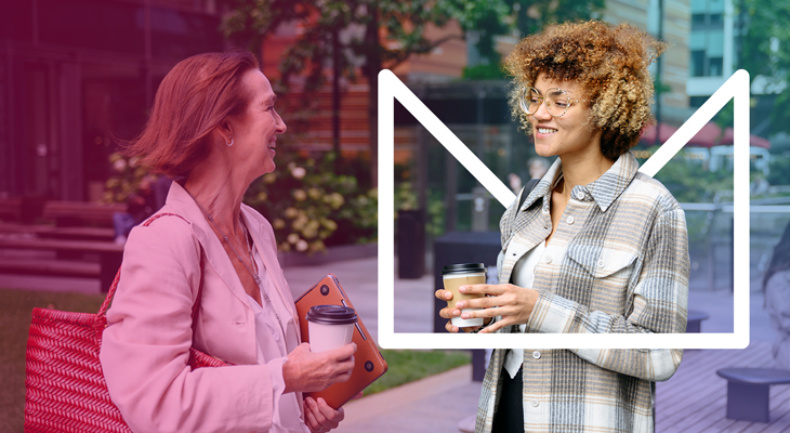
Why mixed-generation teams can and do work
If you’ve been anywhere near TikTok lately, you’ll have seen the “generation gap at work” trend, people joking that Gen Z and Boomers “just don’t get each other”, followed by videos of them being absolute best mates for eight hours straight. It’s painfully accurate.
And this year’s I’m A Celeb even gave us the perfect real-life example. Angry Ginge and Ruby Wax, completely different generations, zero logical overlap, suddenly becoming each other’s go-to jungle pals. Proof that age divides aren’t as big as we make them out to be… if you build the right environment.
In workplaces, it’s the same story. A mix of ages can be your culture’s superpower, but it can also create some head-scratching moments along the way.
Let’s talk about why both matter.
The power of different generations in one team
1. You get different brains solving the same problems
Younger employees ask “why?”
Older employees ask, “What’s worked before?”
Everyone in between tries to keep the peace.
That blend creates better decisions, stronger ideas and fewer blind spots. It’s not about age, it’s about perspective.
2. It builds a more human culture
Think about it: when you’ve got someone explaining who Angry Ginge is, someone quoting Ruby Wax from the 90s, and someone in the middle googling both… You get a connection.
Shared learning = shared belonging.
3. It stops your team from becoming one-dimensional
All-Gen-Z teams can move fast, but miss the historical context.
All-older teams have the know-how, but risk keeping things “as they’ve always been”.
Mixed? You get pace and wisdom.
But let’s be real: the generational gap is also very real
And it shows up in the small stuff:
- The millennial who uses a full stop in a message and accidentally terrifies a Gen Z.
- The Gen Z who says “slay” in a meeting and leaves someone wondering if something’s on fire.
- The manager who emails “call me” with no emoji. Chilling.
Different communication styles, comfort levels and lived experiences can absolutely create friction. And that’s okay – as long as you don’t ignore it.
Bridging the gap (without forcing everyone to bond over snacks)
Talk like humans, not stereotypes
People aren’t “Gen Z” or “Boomers”. They’re people.
Meet in the middle, adapt to each other and lose the labels.
Create mixed-age project teams
Not Gen Z on socials, older employees on strategy, millennials in the middle doing everything. Blend expertise deliberately.
Encourage curiosity over assumptions
If Ruby Wax and Angry Ginge can sit around a fire swapping stories, your team can ask each other questions without judgment.
Make space for all types of leadership
Age doesn’t determine influence – behaviour does.
What this means for building culture and employer brands
People want workplaces that feel real. Warm. Human.
Not cool for the sake of being cool, and not traditional for the sake of being serious.
A generational mix helps you create that balance – a culture where people learn from each other, challenge each other and occasionally bond over reality TV they definitely weren’t planning to watch together.
Because yes, generational gaps exist. But when teams feel safe, seen and supported, those gaps turn into strengths.
And that’s how you build workplaces and employer brands that don’t just function.
They thrive.


